





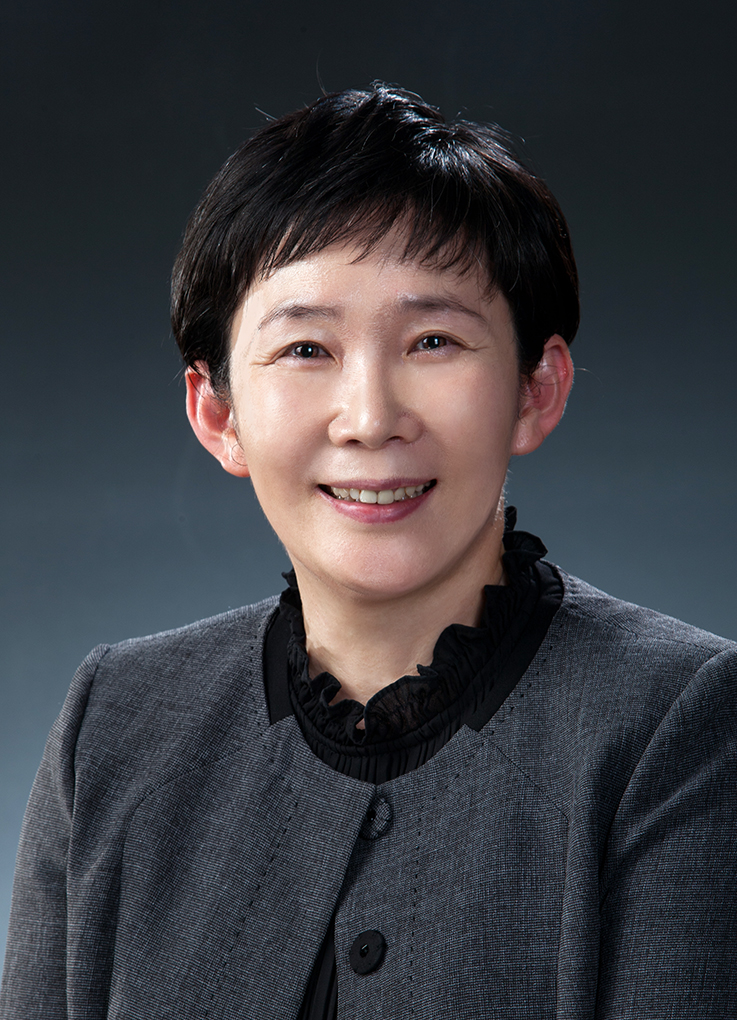
- 전공매니지먼트
- 연구실경영관 640
- 연락처02-2123-5482
- 이메일emchang@yonsei.ac.kr
학력
- 1993 PhD University of Maryland
- 1987 Master's Degree, Yonsei University, Business Administration
- 1985 Bachelor's Degree, Yonsei University, English Literature
주요경력
- Professor, Yonsei University School of Business, 2006–present
- Associate Professor, Yonsei University School of Business, 2004-2006
- Associate Professor, Hankuk University of Foreign Studies, 2001-2004
- Assistant Professor, Michigan State University, 1999-2001
- Research Fellow, Hyundai Research Institute, 1996-1998
강의관심분야
- Motivation Theory, Empowerment, Organizational Behavior, Human Resource Management, Research Methodology
연구관심분야
- Organizational Behavior, Human Resource Management, Failure and Learning, Migrant Workers
주요 연구 논문 및 저서
- ◎ Books, Book chapters, & Book editions
Chang, E. (2026) From Highly Reliable Organization to Growth Mindset: Views in the time of Uncertainties (Choa Publishing)
Chang, E. & Chin, H. (2021) Motivation: Its Nature and Understanding (Pak Young Sa)
Chang, E. & Rhee, J. (eds) (2002) Korean Business and Management: The Reality and the Vision. (The Hollym International Corp).
Berg, P. & Chang, E. (1999) Comparative industrial relations, E. Kossek and R. Block (eds). Managing Human Resources in the 21st Century: From Concepts to Strategic Choice (South-Western College Publishing:Ohio).
Eom, G & Chang, E. (1996) Cross-cultural analysis of employee job satisfaction: A comparative study of Korean, Japanese, and Euro-American joint ventures in China”, Kap-Young Jeong et al. (eds), Building Capacity for Economic Cooperation in Northeast Asia: A Comparative Perspective (Institute of East and West Studies)
◎ Peer-reviewed Journals
◈ Non-Korean journals
Chang, E. & Chin, H. (2018) Signaling or experiencing: Commitment HRM effects on recruitment and employees’ online ratings. Journal of Business Research. 84: 175~185.
Chang, E., Chin, H. & Yae, J. (2014) Organizational work-family culture and affective commitment of working mothers: How career expectations matter. Human Resource Management. 53: 683~700.
Chang, E. , Chin, H., & Kwon, J. (2023) Inclusive, supportive, and fair workplaces for all: workplace satisfaction of low-skilled migrant workers. International Journal of Human Resource Management. 34: 2202–2234.
Chang, E., Chin, H. & Lee, J. (2022) Pre-crisis commitment HRM and employees’ attitudes in a global pandemic: The Role of trust in the government. Human Resource Management. 61: 373~387.
Chang, E., Lee, J., & Chin, H. (2022) Employees striving for innovation in social enterprises: The roles of social mission and commitment-based human resource management. Business Ethics the Environment & Responsibility. 31: 702~717.
Chang, E., Chin, H., Lee, J., & Chung, K. (2020) More than money: The importance of social exchanges for temporary low-skilled migrant workers’ workplace satisfaction. International Migration. 58: 143~161.
Chang, E. (2011) Motivational effects of pay-for-performance: A multilevel analysis of a Korean case. International Journal of Human Resource Management. 22: 3929~3948.
Magoshi, E. & Chang, E. (2009) Diversity management and the effects on employees’ organizational commitment: Evidence from Japan and Korea. Journal of World Business . 44: 31-40.
Chang, E. (2006) Individual pay-for-performance and commitment HR bundle in South Korea. Journal of World Business. 41: 368–381.
Chang, E. & Hahn, J. (2006) Does pay-for-performance enhance perceived distributive justice for collectivistic employees? Personnel Review. 397~412.
Chang, E. (2005) Employees' overall perception of HR effectiveness. Human Relations. 58: 523–544.
Chang, E. (2003) Composite effects of extrinsic motivation on work effort: Case of Korean employees. Journal of World Business. 38: 70-79.
Chang, E. (2002) Distributive justice and organizational commitment revisited: Moderation by layoff in the case of Korean employees. Human Resource Management. 41: 261–270.
Chang, E. & Taylor,MS (1999) Control in multinational corporations: Case of manufacturing industry in Korea. Journal of Management. 541~565.
Chang, E. (1999) Career commitment as a complex moderator of organizational commitment and turnover intention. Human Relations. 52: 1257–1278.
◈ Korean journals
Kim, H., Chang, E. , & Kwon, J. (2026). An Extended Perspective on Helping Behavior and Gratitude in Teams. Journal of Organization and Management. forthcoming
Sung, D., Chang, E. , & Kwon, J. (2025). Resource Conservation Theory Explanation on Junior Military Officers' Work-life Imbalance and Turnover Intention: A Moderating Role of Social Support, Journal of Organization and Management. 49:63~94
Lee, J., Chang, E. , Chin, H., & Kwon, J., (2025), Signaling Theory and Social Information Processing Theory Explanations of Employees' Green Behaviors: Evidence from Two Multilevel Analyses. Productivity Research: An International Interdisciplinary Journal. 39: 49-91 .
Lee, J., Kim, B.,Lim, S.,& Chang, E. (2025) Multiple Reputation Effects on Employee Turnover Intention under Uncertainty: ASignaling Theory Explanation. Korean Management Review. 54:27-54.
Oh, S., Chang, E. , & Kwon, J. (2024) High-reliability organization and error experience sharing:The case of airforce pilots. Korean Journal of Management. 32:1-25.
Chang, E ., Kwon, J., & Kim, J. (2023) Employee green behavior: An individual-level analysis from signaling theory and expectancy theory. Journal of Organization and Management. 47: 1-22.
Chang, E. , Kwon, J., & Kim, B. (2023) ESG as an organizational reputation signal: A study on employee turnover intention and instrumentality perception. Korean Journal of Management. 31: 1-24.
Kim, Y., Chang, E., & Kwon, J. (2023) Empowerment and voice behaviors in a military setting: The mediating roles of procedural justice and intrinsic motivation. Journal of Organization and Management. 47:87-112.
Lee, J., Kwon, J., & Chang, E. (2023) Spillover effects of voice opportunity in teams on members' life satisfaction and perceived social influence. Korean Corporation Management Review. 30:51-76.
Kwon, J., & Chang, E. (2022) Turnover intention of low-skilled migrant workers in South Korea under the employment permit system: Comparing pay and psychological contract factors. YonseiBusinessReview. 59:25-54.
Chang, E. , Chin, H., & Choi, M. (2021) Empowerment effects on creative behaviors in a multiple project team membership context: An individual-level analysis. Korean Journal of Management. 29: 25-57.
Chang, E. , & Chin, H. (2020) Failure and learning behavior: The role of supervisory support. Korean Journal of Management. 28: 33-60.
Chang, E. , & Lee, J. (2019) Organizational citizenship behaviors of low-skilled immigrant workers under employment permit system: Integrating cultural adjustment and social support perspectives. Asia Pacific Journal of Small Business. 41: 107-128.
Chang, E ., Chin, H., & Lee, J. (2019) Value congruence or signaling: Recruitment and turnover intention in social enterprises. Yonsei Business Review. 56: 77-101.
Chang, E. , & Chin, H. (2017) Pay-for-performance as an HR option: An explanation of real option theory. Korean Management Review. 46: 315-340.
Chang, E., & Chin, H. (2016) Firms' commitment to HRM and employees' satisfaction ratings on websites. Journal of Industrial Economics and Business. 29: 1963~1995.
Chang, E. , Chin, H., & Chung, K. (2016) Work satisfaction and turnover intention of foreign workers with the employment permit system. Asia Pacific Journal of Small Business. 38: 1-23.
Chang, E. , Chin, H., & Ye, J. (2016) Happiness at the workplace: An analysis on the two distinct paths of job and organization. Journal of Human Resource Management Research. 23: 79-98.
Choi, M., Chang, E. , & Chin, H. (2016) Individual learning and team atmosphere: A multilevel analysis.Yonsei Business Review. 53:147-173.
Zheng, H., Lee, J., & Chang, E. (2016) Employee acceptance of individual pay for performance: Implications from information exchange theories. Journal of Organization and Management. 40:1-29.
Chang, E. (2008) Commitment HRM of multinational corporations in Korea. International Business Journal. 19: 1-25.
Chang, E. (2006) Commitment HR practices and employees' organizational commitment: A comparative analysis between Korea, Japan, and China. Journal of Organization and Management. 30: 115-145.
Chang, E. (2005) Pay for performance in Korean companies: Explanations from institutional and motivation theories. Korean Management Review. 34: 847–865.
Chung, K., & Chang, E. (2005) Family-friendly policies and employees' organizational commitment. Family and Culture. 17:59-84.
Chang, E. (2003) Effects of individual performance based compensation on employee's work effort: In the context of commitment HR bundles. Korean Journal of Management. 11: 133-158.
Chang, E. (1997) Individual career variables and organizational commitment. Korean Management Review. 26: 271-286.
Chang, E. (1996) A comparative study on organizational commitment: The case of regular and non-regular female employees. Journal of Organization and Management. 19: 301-321.
주요 학술활동 및 수상
- President of the Korean Society for Human Resource Management (34th)
- Outstanding Paper Award, Journal of Business Administration, Korean Society of Business Administration, Yonsei University Yonsei Business Research Institute
- The book *Motivation: Phenomenon and Understanding* was selected as an Outstanding Academic Book by the National Academy of Sciences of Korea.
- Best Paper Award of Japan Academy of International Business Studies 2009
- Emerald Literati Network Awards for Excellence 2007
- Distinguished Professor Award, Hankuk University of Foreign Studies 2002